
Interview mit Philipp Liehr
Wir haben mit ihm darüber gesprochen, warum Holz das ideale Material für ihn ist, den Astronauten als Symbolfigur und warum ihn sein Wohnort Halle so inspiriert.
Philipp Liehr zählt zu den führenden zeitgenössischen Holzbildhauern in Deutschland. Mit beeindruckender Präzision und künstlerischer Sensibilität verwandelt er alltägliche Momente in zeitlose Skulpturen. Wir haben mit ihm über den Astronauten als Symbolfigur, seinen kreativen Prozess und das ideale Spannungsfeld für seine Ideen gesprochen.
Philipp, welche Bedeutung hat die Figur des Astronauten für dich?
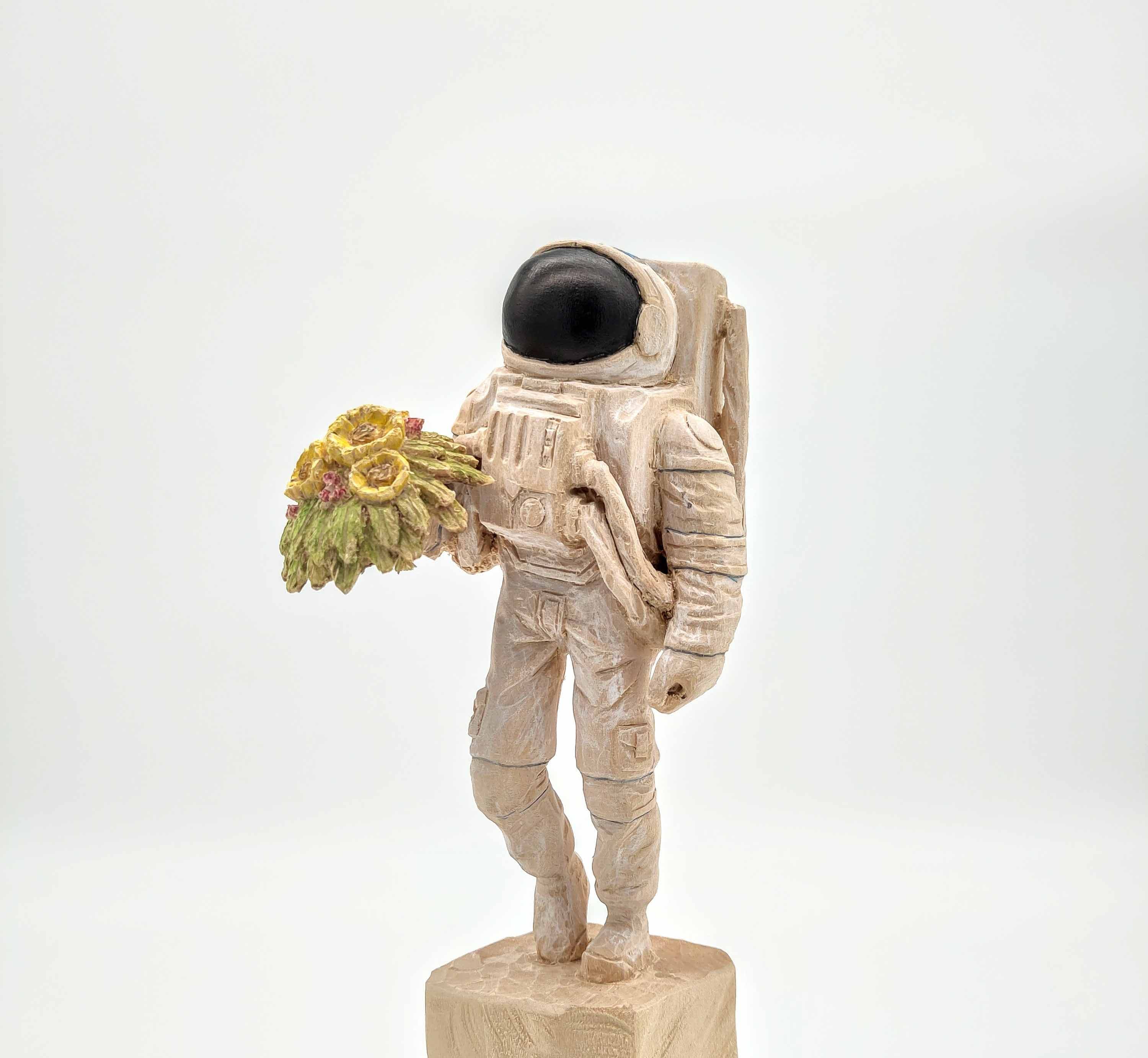
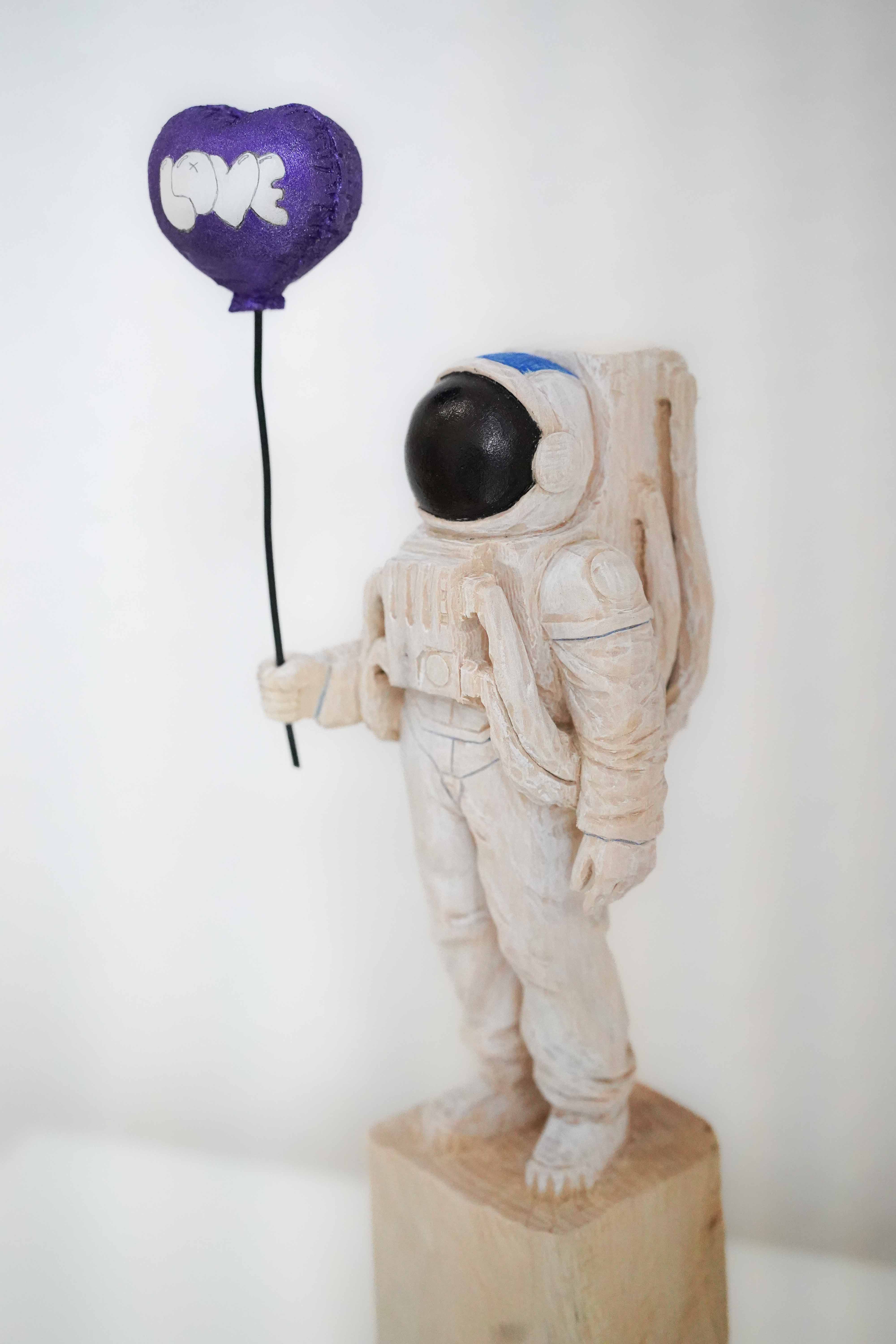
Philipp: Das fing alles mit einer Science-Fiction-Reihe an. Die zentrale Idee darin war, dass die Erde irgendwann zu klein für die Menschheit wird – also muss man ins All ausweichen. Dieser Gedanke hat mich beschäftigt. Ich gehe solche Themen meist mit einer Portion Ironie und Humor an. Und so kam die Frage auf: Wie würde unser ganz normaler Alltag im Weltall aussehen? Daraus entwickelte sich die Figur des Astronauten – wie ein Rollenspiel. Ich setze ihn in banale Alltagssituationen, die durch den Kontext des Weltalls plötzlich absurd wirken. Das gefällt mir. Aber es gibt auch eine ernstere Ebene: Wenn die Menschheit wirklich ins All umzieht – wie manche Wissenschaftler prognostizieren – könnte der Astronaut eine Art Symbolfigur werden. Fast wie ein Heiliger der Zukunft. Auch das finde ich spannend.
Das sieht man in deinen Werken! Der Astronaut wirkt oft mystisch – der Anzug macht den Menschen dahinter anonym und dadurch zu einer Art Projektionsfläche.
Philipp: Genau. Die Anonymität lässt Raum für Interpretationen – wer steckt wohl hinter dem Visier? Wer könnte es sein? Anfangs war das gar kein bewusster Gedanke von mir, aber die Reaktionen der Leute haben mir diese Perspektive eröffnet. Einmal habe ich einen Astronauten geschnitzt, der seinen Helm abnimmt – darunter kam ein Frauenkopf zum Vorschein. Damit wollte ich das klassische Bild vom männlichen Raumfahrer bewusst durchbrechen.
Kannst du uns ein bisschen über dein Atelier erzählen? Wo arbeitest du und was bedeutet dir dieser Ort?
Philipp: Mein Atelier ist in Dölau, einem Stadtteil von Halle – in einer alten Schamottfabrik. Die war ziemlich heruntergekommen, bis ein exzentrischer Altpunker sie gekauft und angefangen hat, Werkhallen zu vermieten. Ich habe mir eine davon gemietet. Das Gebäude hat eine spannende Geschichte – früher war dort wohl sogar die Stasi untergebracht. Es gibt noch alte Antennenmasten und die Leute in der Umgebung kennen das Gebäude gut. Es hat so etwas Geheimnisvolles. Für mich ist das Atelier wie ein Rückzugsort – fast romantisch. Eine alte Fabrik als Arbeitsstätte, das hat was. Es ist mein persönlicher Elfenbeinturm, mein Ort der Konzentration. Aber nur dort zu arbeiten reicht mir nicht – ich brauche auch Austausch. Die Rückmeldung von außen, Menschen, die meine Kunst erleben, ist mir wichtig.
Halle ist bisher der inspirierendste Ort für mich. Es ist günstig, hat Ecken und Kanten – hier gibt’s Reibung. Diese Unperfektheit ist für mich viel inspirierender als die Glätte und Ordnung, die ich in München erlebt habe.
Was ist dir im kreativen Prozess besonders wichtig?
Philipp: Die Initialzündung! Der Moment, in dem eine Idee plötzlich da ist – oft durch Gespräche oder zufällige Beobachtungen. Wenn ich spüre: „Das wird was“, dann entsteht so ein richtiger Energieschub. Das eigentliche Machen kann dann auch mal mühsam sein – aber wenn ich zum Schluss mein Logo draufsetze und Fotos vom fertigen Werk mache, stellt sich so ein richtig rundes Gefühl ein. Dann weiß ich: Es hat sich gelohnt.
Meine Werke erzählen immer Geschichten – meist mit einer Prise Humor oder Ironie. Der erzählerische Aspekt steht immer im Vordergrund. Oft nutze ich Figuren wie Astronauten oder comicartige Charaktere – zum Beispiel meine „Auszieh-Menschen“. Die Oberflächen sind sehr fein gearbeitet, ich achte auf viele Details.
Wie wichtig ist für dich das Material?
Philipp: Sehr! Holz hat sich als mein Lieblingsmaterial herausgestellt. Ich habe eine Ausbildung als Zahntechniker und viel mit Gussformen, Beton usw. gearbeitet. Aber Holz lässt sich für meine Zwecke am besten formen. Manchmal kombiniere ich Materialien – bei lebensgroßen Figuren zum Beispiel habe ich den Körper aus Beton gegossen und weiß gestrichen, während die Kleidung aus Holz war. Der Kontrast zwischen den Materialien hilft mir, die Geschichte zu erzählen.
Spielt deine eigene Gefühlswelt eine Rolle in deiner Kunst?
Philipp: Ich versuche meistens, meine persönlichen Emotionen rauszuhalten und stattdessen andere Themen aufzugreifen. Aber es gibt Ausnahmen. Einmal habe ich zum Beispiel einen Astronauten geschnitzt, der ein Kind im Arm hält – das kam aus einer sehr persönlichen Phase. In der Regel greife ich aber Alltagsmomente auf – Situationen, die leicht übersehen werden, für mich aber eine besondere Bedeutung haben.
Hast du ein Beispiel?
Philipp: Klar – bei meinen „Auszieh-Menschen“ geht es um intime Momente. Sie ziehen sich aus – etwas, das eigentlich privat ist, passiert hier öffentlich. Dadurch wird der Betrachter Teil eines Spiels mit der Grenze zwischen Privatem und Öffentlichem.
Bei den Astronauten nehme ich alltägliche Szenen – zum Beispiel jemanden beim Rasieren – und setze sie ins Weltall. Das macht sie absurd, bricht den Kontext und schafft eine neue Perspektive.
Gibt es einen Ort, an dem eines deiner Werke etwas ganz Besonderes für dich ist?
Philipp: Ja, auf jeden Fall! Einmal wurde ein Werk von mir in die USA verkauft – allein die Vorstellung, dass eine meiner Figuren über den Atlantik gereist ist, war ein starkes Gefühl. Ein anderes Highlight war das Hundertwasserhaus in Magdeburg: Auf dem Dachgarten stehen von mir gegossene Vögel aus Beton. Der Bereich ist normalerweise nicht öffentlich zugänglich – es hat etwas Geheimes, fast Magisches.
Was inspiriert dich, woher kommen neue Ideen?
Philipp: Ich habe eine Liste auf meinem Handy, in der ich ständig Ideen notiere. Wenn mir etwas einfällt – beim Spazieren, im Gespräch, im Bus – schreibe ich es sofort auf. Diese Liste ist mein Ideenspeicher. Es ist ein bisschen wie „sehen lernen“: Je mehr ich mich damit beschäftige, desto mehr entdecke ich im Alltag, was das Potenzial für Geschichten hat.
Könnte man sagen, deine Kunst ist wie ein Tagebuch?
Philipp: Interessanter Gedanke! So habe ich es noch nie betrachtet. Aber wenn ich durch meine Ideensammlung scrolle, weiß ich oft genau, wo ich war und was ich gedacht habe, als mir die Idee kam. In gewisser Weise ist das wirklich wie ein visuelles Tagebuch.
Vielen Dank, Philipp!
Aufgezeichnet am 3.4.2025